Six Skin Conditions Often Mistaken for Acne Can Lead to Wrong Treatment
Several skin conditions including rosacea, folliculitis, and perioral dermatitis look almost identical to acne but require completely different treatments. Many people waste time and money on acne products that won't help these conditions.
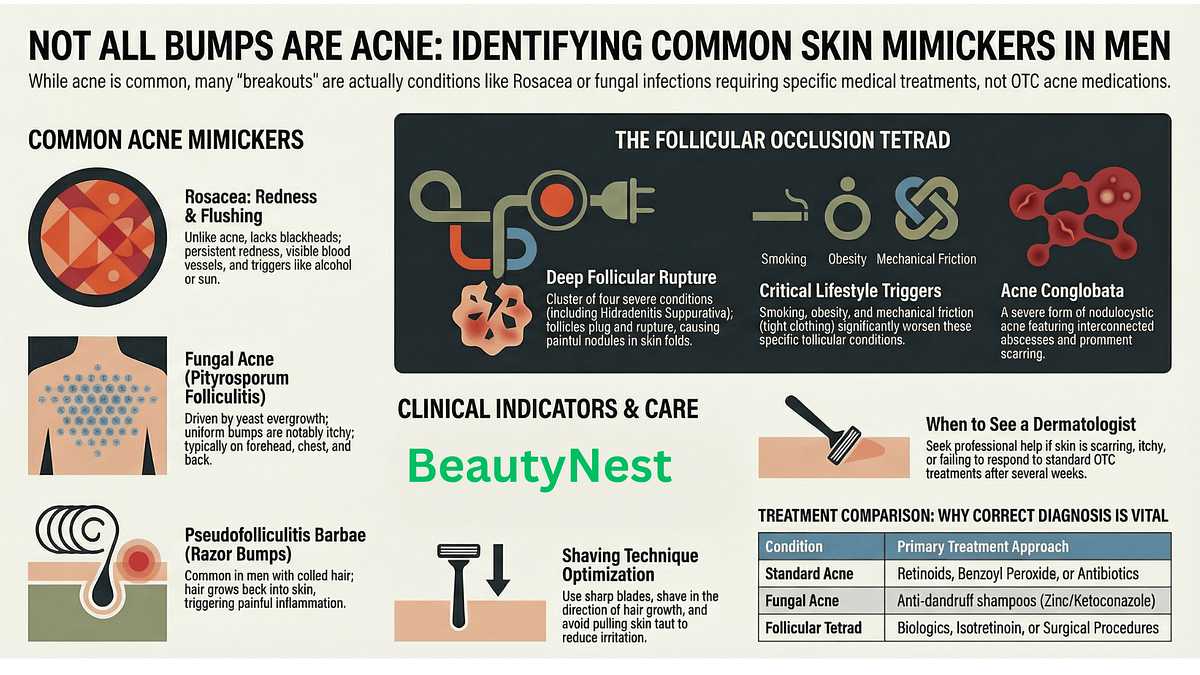
Dermatologists are seeing more patients who think they have acne but actually have other skin conditions that look nearly identical. The most common imposters include rosacea, folliculitis, perioral dermatitis, and fungal acne.
Rosacea typically appears as red bumps and patches on the face, especially the cheeks and nose. Unlike regular acne, it rarely includes blackheads and often comes with facial flushing.
Folliculitis happens when hair follicles get infected or irritated, creating small red bumps that look like pimples. Fungal acne, also called pityrosporum folliculitis, shows up as tiny whiteheads and pustules that are usually itchy.
Perioral dermatitis creates small red bumps around the mouth area and can be triggered by certain skincare products or steroids. Each condition needs specific prescription medications or treatments like laser therapy.
Dermatology experts say the key difference is that regular acne treatments don't work on these conditions. If your skin isn't improving after 6-8 weeks of acne treatment, you likely need a professional diagnosis.
Using the wrong skin treatment can make your condition worse and cost you money. Getting the right diagnosis means faster healing and avoiding products that might irritate your skin further.
See a dermatologist if acne treatments aren't working after two months of consistent use.
Was this article helpful?
0 people found this helpful