Toxic Green Algae Covers South Africa's Hartebeespoort Dam in Satellite Images
A thick mat of toxic green algae and invasive water plants has spread across the surface of South Africa's Hartebeespoort Dam, according to 2022 satellite images. The bright green mass covers the reservoir and can kill fish by removing oxygen from the water.
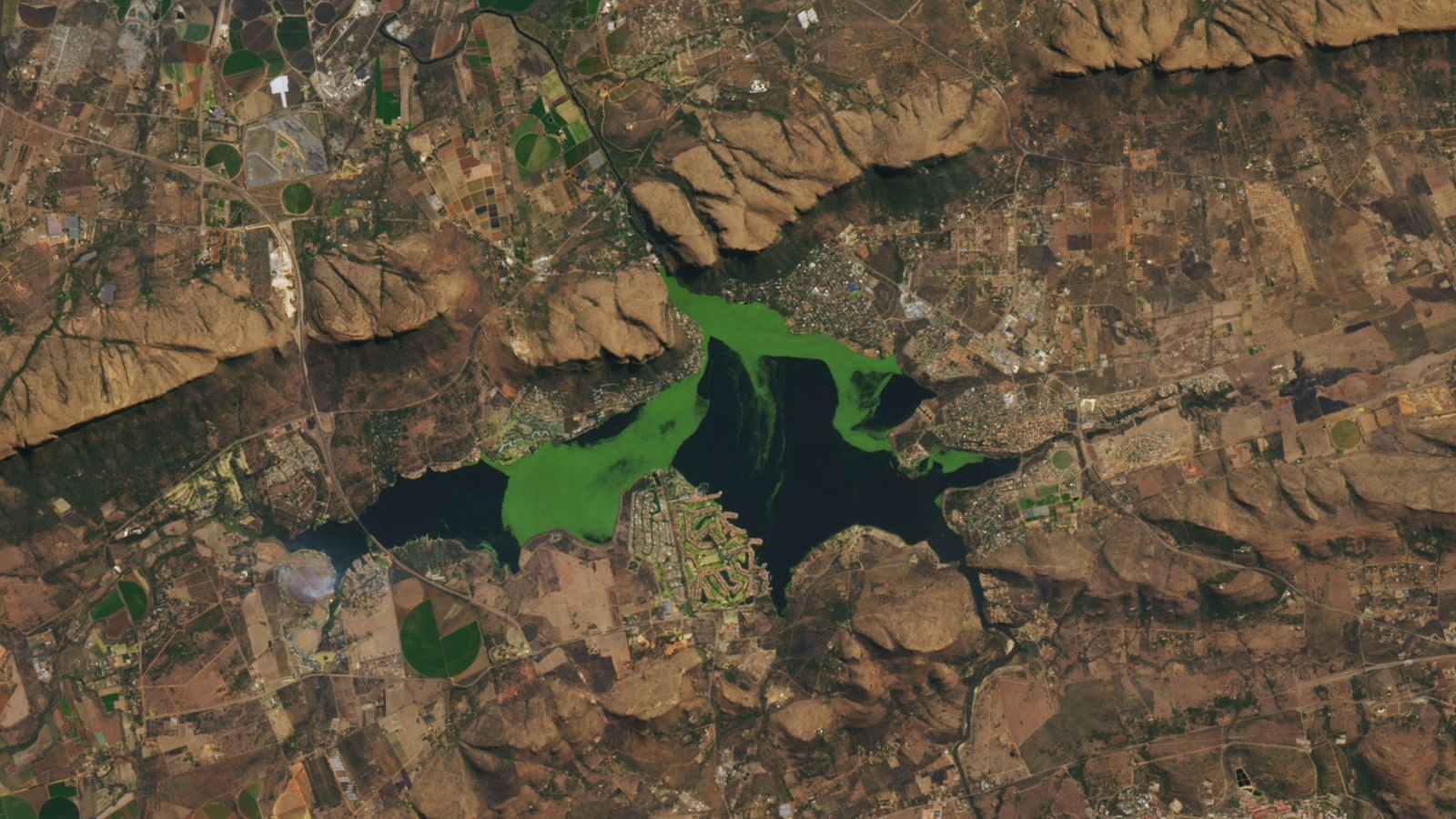
Satellite photos from 2022 reveal a massive green blanket covering Hartebeespoort Dam, a major reservoir located about 40 kilometers northwest of Pretoria, South Africa. The vivid green mass consists of harmful algae blooms mixed with invasive aquatic plants.
The toxic combination creates two serious problems. First, the algae produces poisons that make water dangerous for humans and animals. Second, both the algae and invasive plants use up oxygen in the water, which can kill fish and other aquatic life.
NASA satellite data shows these green blooms form, drift, and fade throughout the year at Hartebeespoort Dam. The reservoir sits in the Bushveld Complex region and serves as an important water source for the surrounding area.
Algae blooms typically explode when excess nutrients from fertilizer runoff, sewage, or other pollution enter water bodies. The nutrients act like food for the algae, causing rapid growth that can cover entire lakes or reservoirs.
This toxic bloom makes the water unsafe for drinking, swimming, or fishing. Similar algae problems happen worldwide when pollution feeds these organisms, threatening local water supplies and wildlife that people depend on.
Scientists will monitor the dam through continued satellite tracking to see if the algae blooms worsen or improve over time.
Was this article helpful?
0 people found this helpful